

Renters Rights Act 2025
An update on where The Renters Rights Bill is currently as of 20.11.2025
The Renters Rights Act 2025 became law on 27th October 2025 with the changes to be implemented in stages. Below is a guide to the information we currently know and the timeframe as it currently stands.
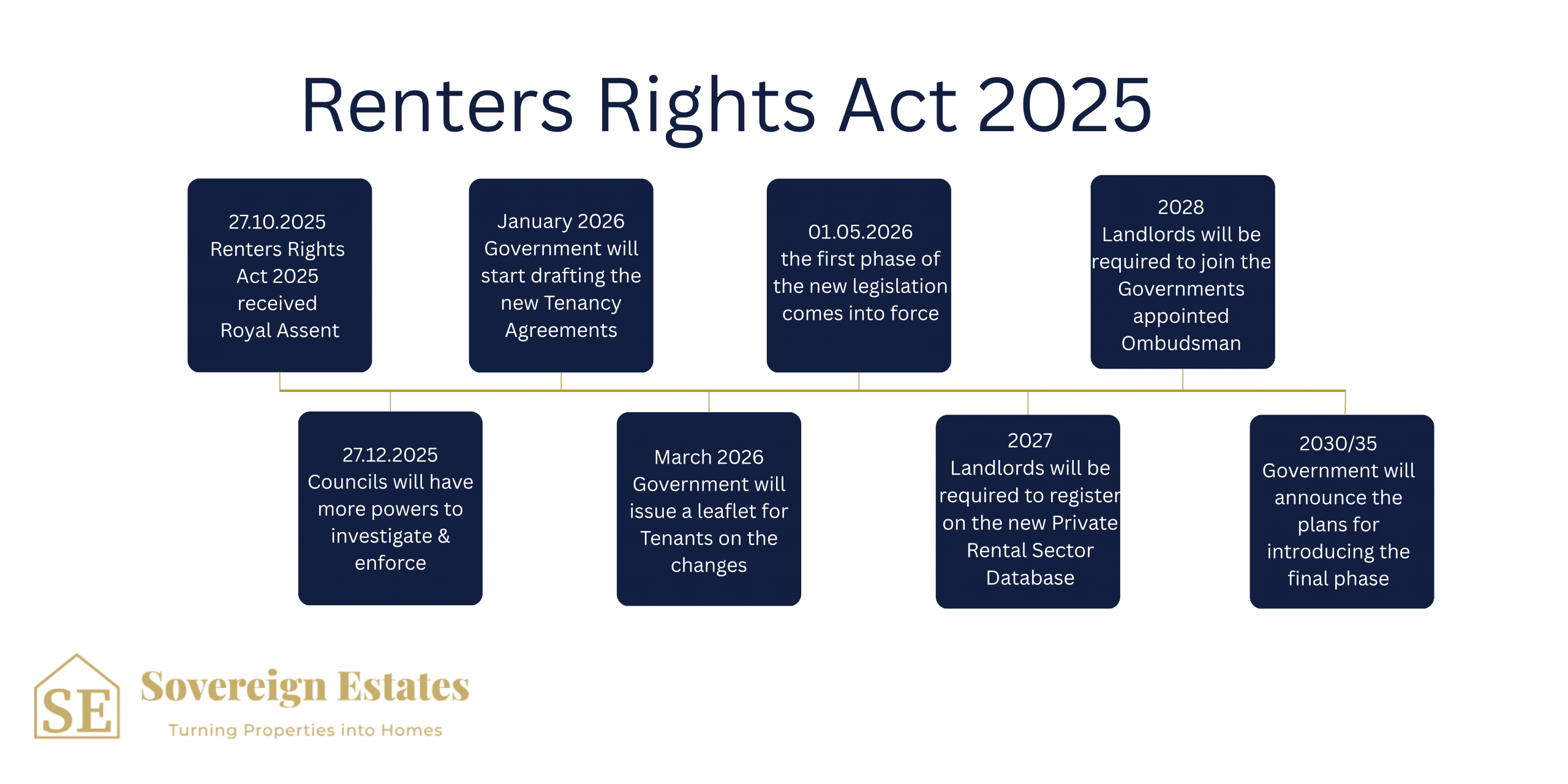
The Private Rental Sector and the Renters’ Rights Act 2025 – What Landlords and Tenants Need to Know
The Private Rented Sector (PRS) in England has seen significant growth over the last two decades, with millions of tenants now relying on privately rented accommodation as their long-term housing solution. As the sector has expanded, so too has the demand for improved tenant protections, clearer legislation, and higher property standards.
The Renters’ Rights Act 2025 is one of the most substantial reforms to the UK rental market since the Housing Act 1988. Designed to create a fairer balance between landlords and tenants, the legislation introduces sweeping changes that every landlord, tenant, letting agent, and property investor must understand.
At Sovereign Estates, we believe that professional guidance, proactive property management, and clear communication are more important than ever as the private rental sector enters a new era.

Security for tenants, raising standards across the Private Rental Sector, and modernise the rental process across England. The Act introduces major reforms including:
- The abolition of Section 21 “no fault” evictions
- The end of Assured Shorthold Tenancies (ASTs)
- The introduction of periodic tenancies
- Stronger protections against unfair rent increases
- Increased landlord accountability
- New ombudsman and property database requirements
- Greater protections for tenants with pets, children, or those receiving benefits
These changes are designed to create greater stability for renters while ensuring responsible landlords can continue to operate successfully within the private rented sector.

One of the most talked-about aspects of the Renters’ Rights Act 2025 is the abolition of Section 21 notices, also known as non-fault evictions. Previously, landlords could regain possession of a property without providing a specific reason once the tenancy agreement had expired. Under the new legislation, landlords will now need to rely on valid legal grounds under Section 8 if they wish to repossess a property. These grounds may include:
- Rent arrears
- Anti-social behaviour
- The landlord wishing to sell the property
- The landlord or a family member moving into the property
This change aims to provide tenants with greater security and confidence in their homes while still allowing landlords to regain possession where legitimate circumstances apply.

The traditional Assured Shorthold Tenancy (AST) structure has been abolished and replaced with Assured Periodic Tenancies (APT). This means that instead of fixed-term tenancy agreements, most residential tenancies in England will become rolling periodic agreements. Tenants will generally be able to remain in the property indefinitely unless they choose to leave or the landlord has valid legal grounds for possession. For tenants, this offers greater flexibility and long-term stability. For landlords, it highlights the importance of:
- Thorough tenant referencing
- Professional property management
- Consistent communication
- Compliance with evolving legislation
At Sovereign Estates, our experienced lettings and property management team helps landlords adapt to these changes while protecting their investments and maintaining positive landlord-tenant relationships.

The Renters’ Rights Act 2025 also introduces new rules surrounding rent increases. Landlords will generally only be able to increase rent once per year using the correct legal process, and tenants will have the right to challenge excessive increases through a tribunal. The reforms are intended to prevent unfair or unreasonable rent hikes and reduce what the government describes as “backdoor evictions.” This makes accurate market appraisals more important than ever. At Sovereign Estates, we provide realistic rental valuations based on:
- Local market demand
- Comparable rental properties
- Seasonal market trends
- Tenant demand
- Property condition and presentation
Our goal is to help landlords achieve the strongest possible rental returns while remaining compliant and competitive within the local market.

While some landlords may initially feel concerned about increased regulation, the new legislation also creates opportunities for professional landlords and well-managed agencies to stand out. Landlords who invest in are likely to benefit from improved tenant retention, reduced void periods, and a stronger reputation within the rental market:
- High-quality accommodation
- Proactive maintenance
- Compliance
- Strong tenant communication
- Professional management
The reality is that the private rented sector is evolving towards a more professional and service-driven industry. At Sovereign Estates, we support landlords through every stage of the process, including:
- Lettings
- Tenant sourcing
- Rent collection
- Compliance
- Property inspections
- Maintenance coordination
- Full property management
- Portfolio advice
Our tailored approach helps landlords remain protected, compliant, and profitable within an increasingly regulated sector.

The government has also announced plans for:
- A new Private Rented Sector Database
- A Landlord Ombudsman
- Improved housing standards
- Expanded enforcement powers for councils
The long-term objective is to improve the quality, safety, and transparency of rental accommodation across England. For professional letting agents and responsible landlords, these reforms can help improve confidence in the sector and create a more balanced relationship between landlords and tenants.

For tenants, the Renters’ Rights Act 2025 introduces stronger protections and greater stability. Key benefits include:
- Increased housing security
- Protection from unfair evictions
- More transparency
- Stronger property standards
- Fairer rent increase procedures
- Greater flexibility with tenancy agreements
Tenants are also expected to benefit from improved professionalism within the sector as compliance standards continue to rise.

With legislation becoming increasingly complex, professional property management has never been more important. Landlords who attempt to self-manage properties without fully understanding compliance obligations may face:
- Financial penalties
- Delays in possession proceedings
- Invalid notices
- Legal disputes
- Increased risk exposure
Working with an experienced and knowledgeable letting agent can significantly reduce these risks. At Sovereign Estates, we stay up to date with all current legislation and compliance requirements to ensure landlords remain protected while providing tenants with a professional and responsive service.
Sovereign Estates – Supporting Landlords and Tenants Through Change
The Private Rented Sector is entering a new chapter, and preparation is essential. Whether you are:
- A landlord seeking advice on the Renters’ Rights Act 2025
- A property investor reviewing your portfolio
- A tenant searching for a professionally managed home
- A landlord considering switching agents
- A first-time landlord entering the market
Sovereign Estates is here to help. Our experienced team provides expert guidance on lettings, property management, compliance, and investment across Eastbourne, Sovereign Harbour, and the surrounding areas.
The rental market is changing — and with the right guidance, landlords and tenants alike can move forward with confidence.